









There are different ways to beautify your home; the natural way is to add plants to the surroundings. Indoor and outdoor plants in colourful pots add beauty, freshness, and liveliness to the home environment A variety of plants can be added to the home, including air-purifying plants, blooming plants, medicinal plants, etc.
One plant that is commonly found in most Indian household, is the auspicious Holy Basil or Tulsi. Tulsi is worshippedas a material incarnation of Goddess Lakshmi; hence, it is considered as sacred. In Vastu Shastra, having a Tulsi plant at home removes negative energy and Vastu dosha. Vastu recommends the best direction and location for Tulsi placement, its importance, and tips to follow.
Tulsi Plant Vastu Direction in the Home
Place the Tulsi plant facing the north, north-east, or east directions. The north-east direction is known as Eeshanya, equal to God. East is the direction from which the sun rises, and north is the direction of wealth (Kuber). Therefore, all these directions are appropriate for the Tulsi plant's placement.
Tulsi Plant Vastu Location in the Home
Ideally, the Tulsi plant should be placed in the centre of the home's verandah. The centre is the Brahma Sthan, the heart of all earthly activities. In the case of flats, locate the Tulsi plant on the balcony attached to the bedroom.
You may like to read: Vastu Shastra Tips for Home Colours
Vastu Tips for Keeping A Tulsi Plant in the Home
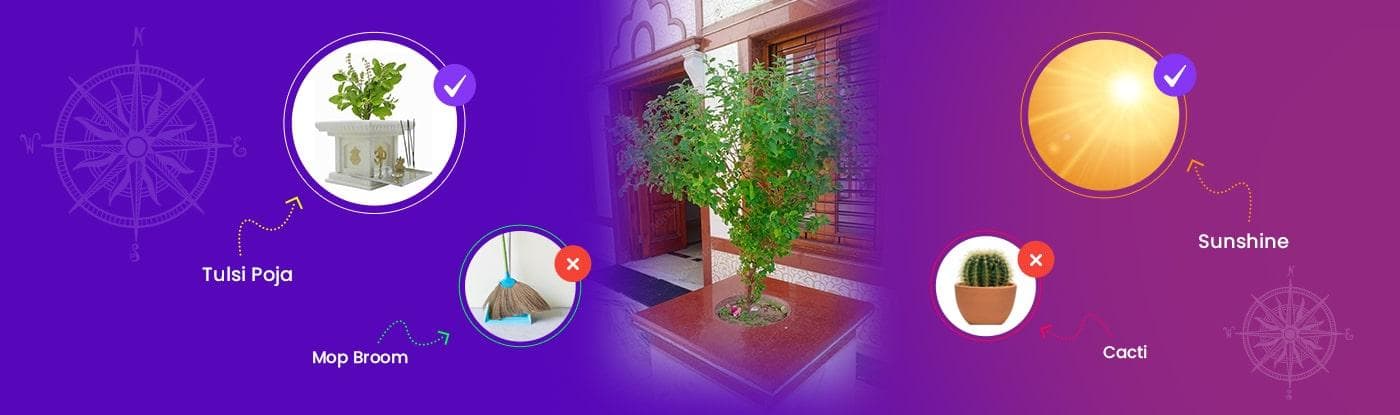
1) Build a consecrated structure, or Tulsi mandir, and place the pot on it. Never keep the Tulsi plant pot on the ground. It should always be above ground level. The structure should be made from wood or marble, as these are considered more propitious in Vastu Shastra than cement.
2) Vastu science does not recommend nurturing thorny plants like cacti, aloe vera, or plants with a rough texture near the Tulsi plant. Nurture flowering and other pleasant plants around the Tulsi plant.
3) Keep the area around the Tulsi plant neat and clean. Clear the clutter or any material used for cleaning, such as a mop or broom. The surrounding area should be properly maintained for positive vibes.
4) As per Vastu for the Tulsi plant, the plant should not get dried or damaged in the house, as it is believed to be a bad omen and spread negativity in the house. To ensure that the plant thrives, water it properly and ensure it receives enough sunlight. Therefore, the east direction is most favourable for the Tulsi plant, as it does best in full sunlight.
5) One of the most important Vastu tips for Tulsi plants is to offer water with the help of a kalash and perform pooja. You can light a ghee diya or incense stick, offer flowers, and kumkum every day to seek the blessings.
6) A question often comes to mind: how many Tulsi plants can be kept in the home? As per Vastu guidelines, odd numbers of plants like one, three, or five are the best.

Placing and nurturing the Tulsi plant as per Vastu can ensure that the plant thrives and blesses your home with its goodness and positivity.
For more Vastu Tips, book an appointment with Dr. J C Chaudhry.
Frequently Asked Questions
Why is the Tulsi plant considered auspicious in Vastu Shastra?
In Vastu Shastra, the Tulsi plant is regarded as a powerful source of positive energy and spiritual protection. It is traditionally associated with Goddess Lakshmi and is believed to neutralize negative vibrations, purify the environment, and help reduce Vastu dosha within the home. Its presence is considered both spiritually elevating and energetically balancing.
Which is the best direction to place a Tulsi plant in the home?
The most favourable directions for placing a Tulsi plant are north, east, and north-east (Eeshanya). These directions are associated with prosperity, divine energy, and solar vitality. Placement in these zones helps maximise the plant’s positive impact on the household’s energy flow.
Can a Tulsi plant be kept in apartments or flats?
Yes. In apartments or flats, the Tulsi plant can be placed on a balcony, preferably one that receives adequate sunlight and aligns with east, north, or north-east directions. Care should be taken to elevate the plant on a proper stand or Tulsi mandir, ensuring it is never placed directly on the floor.
Are there any precautions to follow while keeping a Tulsi plant at home?
Yes. The Tulsi plant should be well-maintained and healthy at all times, as a dried or damaged plant is considered inauspicious. Thorny plants should not be kept near it, the surrounding area must remain clean, and daily care such as watering, sunlight exposure, and simple pooja rituals is recommended to sustain positive vibrations.